The Best Budget Laptops for General College Students in 2026: Balancing Performance and Affordability

Entering college in 2026 means stepping into an academic environment that is more digitally integrated than ever. For a general student—those majoring in humanities, social sciences, business, or education—a laptop is not just a luxury; it is a primary workstation for writing essays, attending virtual seminars, managing spreadsheets, and occasionally streaming content during downtime. However, with the rising costs of living and tuition, finding a “low budget” yet capable machine is a top priority.
The definition of a “budget” laptop has shifted. In 2026, we no longer look for the cheapest possible plastic shell. Instead, we look for “value-driven” devices that offer longevity. A good student laptop today must balance portability, a decent battery life that lasts through back-to-back lectures, and enough processing power to handle multitasking across dozens of browser tabs.


The Hardware Essentials: What to Look for in 2026
Before diving into specific models, it is crucial to understand the baseline specifications required for a smooth experience in 2026. Software has become more resource-heavy, and “AI-ready” features are now standard even in entry-level operating systems.
First, RAM is non-negotiable. While 4GB was acceptable years ago, 8GB is now the absolute minimum for Windows 11 or ChromeOS to function without frustrating lag. If you can find a deal on a 16GB model, take it. Second, Storage should be an SSD (Solid State Drive) rather than an HDD. A 256GB SSD provides enough speed to boot the laptop in seconds, though 512GB is the “sweet spot” for those who prefer to keep their files offline.
Lastly, Battery Life. A student’s life is mobile. You need a laptop that can survive at least 7 to 9 hours on a single charge. In 2026, modern processors from Intel (N-series or Core i3), AMD (Ryzen 3), and even Qualcomm’s entry-level ARM chips have made great strides in power efficiency, making “all-day” battery life possible even on a budget.
Top Recommendations for 2026
1. Acer Aspire Go 15 (2026 Edition)
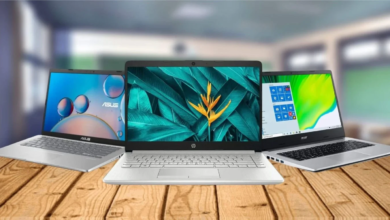
The Acer Aspire series has long been the king of the budget segment, and the 2026 Aspire Go 15 continues this legacy. It is designed specifically for productivity. Equipped with the latest Intel N100 or Core 3 processors, it offers a surprisingly snappy experience for web browsing and Microsoft Office tasks. The 15.6-inch display is large enough for split-screen multitasking—perfect for taking notes while watching a lecture video. Its main draw is the price-to-performance ratio, often retailing significantly lower than its competitors while maintaining a full array of ports (USB-C, HDMI, and USB-A).
2. Lenovo IdeaPad Slim 3x (Qualcomm Powered)
Lenovo has embraced the ARM revolution with the IdeaPad Slim 3x. By using a budget-friendly Snapdragon X series chip, this laptop offers battery life that rivals premium MacBooks—often reaching 14 hours of real-world use. For a student who spends all day on campus without easy access to a power outlet, this is a game-changer. The “Slim” moniker is well-deserved; it is lightweight and fits easily into a standard backpack. While it may struggle with heavy video editing or specialized engineering software, it is a champion for “General Students” who live in Word, Google Docs, and Canvas.
3. ASUS Vivobook Go 14
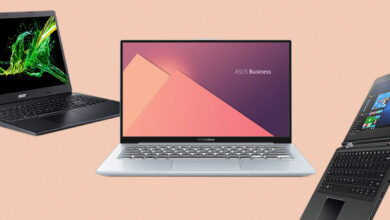
For students who prioritize aesthetics and portability, the ASUS Vivobook Go 14 is a standout. It often features a higher-quality display than other budget options, sometimes even offering an OLED variant at a slight premium. The keyboard is tactile and comfortable for long typing sessions—a critical feature for writing 3,000-word term papers. ASUS also includes a “NumberPad” (a digital keypad built into the touchpad) on many models, which is incredibly useful for business or social science students dealing with data entry.
4. HP Laptop 14s (AMD Ryzen 3 Series)
The HP 14s remains a reliable “safe bet.” The 2026 version utilizes AMD Ryzen 3 7000 or 8000 series processors, which are known for better integrated graphics than their Intel counterparts. This means that if you like to do some light photo editing or play casual games like Minecraft or Stardew Valley after class, the HP 14s will handle it more gracefully than other budget laptops. It also features a fast-charging capability, often reaching 50% battery in just 45 minutes.
5. Lenovo Chromebook Plus 14
If your entire academic life exists within a browser (Google Workspace, Notion, Web-based apps), a Chromebook Plus is the smartest way to save money. Unlike the cheap Chromebooks of the past, the “Plus” designation guarantees a certain level of performance: a 1080p webcam, a fast processor, and at least 8GB of RAM. In 2026, ChromeOS is highly optimized and even supports some offline AI features. It is virtually immune to the typical viruses that plague Windows, making it a low-maintenance choice for the non-tech-savvy student.
Maximizing Your Budget: Tips for Students
Buying the laptop is only the first step. To truly succeed on a low budget, students should take advantage of “Education Discounts.” Most major manufacturers (Apple, Samsung, Dell, Lenovo) have dedicated portals where a student ID or a university email address (.edu) can shave 10% to 20% off the retail price.
Furthermore, consider the “Refurbished” market. A high-end laptop from 2024 or 2025, certified and sold by the manufacturer with a warranty, will often outperform a brand-new budget laptop from 2026 for the same price. Look for “Certified Refurbished” labels to ensure you are getting a device that has been properly tested.
The Verdict
Choosing a laptop in 2026 doesn’t have to be a choice between “cheap and broken” or “expensive and powerful.” For the majority of students, the Lenovo IdeaPad Slim 3x offers the best modern experience due to its incredible battery life, while the Acer Aspire Go 15 remains the gold standard for those who need a traditional Windows machine at the lowest possible price.
By focusing on the essentials—8GB of RAM, SSD storage, and a reliable battery—you can secure a tool that will not only get you through your freshman year but will remain a faithful companion until your graduation day.
Sources and References
TechRadar (2026). “The Best Budget Laptops: Tested and Reviewed.”
PCMag (2026). “Top Laptops Under $500 for Students.”
Tom’s Guide (2026). “Best Value Laptops for College Students.”
Ultrabook Review (2026). “Portable and Affordable: Student Guide 2026.”
OwnPetz (2026). “Best Affordable Laptops for Students in 2026.
Mahali Badr is a passionate travel writer, seasoned explorer, and the creative force behind PergiLiburan.com, a rapidly growing Indonesian travel and lifestyle website dedicated to inspiring and guiding travelers from around the world. With years of hands-on experience traveling domestically and internationally, Mahali has developed a deep understanding of what makes an unforgettable journey — from discovering hidden local gems to navigating the complexities of travel planning with ease.
More About Mahali Badr : https://pergiliburan.com/author-box/